
Hiring teams are under pressure from both sides. On one hand, they need to move faster, review more applicants, and keep candidates engaged. On the other, they still need to make careful, fair, high-quality decisions. That tension is exactly why interest in AI recruitment software has grown so quickly.
For teams new to the category, the challenge is not just understanding what the technology does. It is understanding where it actually helps, where it does not, and how to use it responsibly. In this guide, we will break down the fundamentals of AI recruitment software, explain how it fits into modern hiring workflows, and outline what to look for when evaluating different platforms.
What Is AI Recruitment Software?
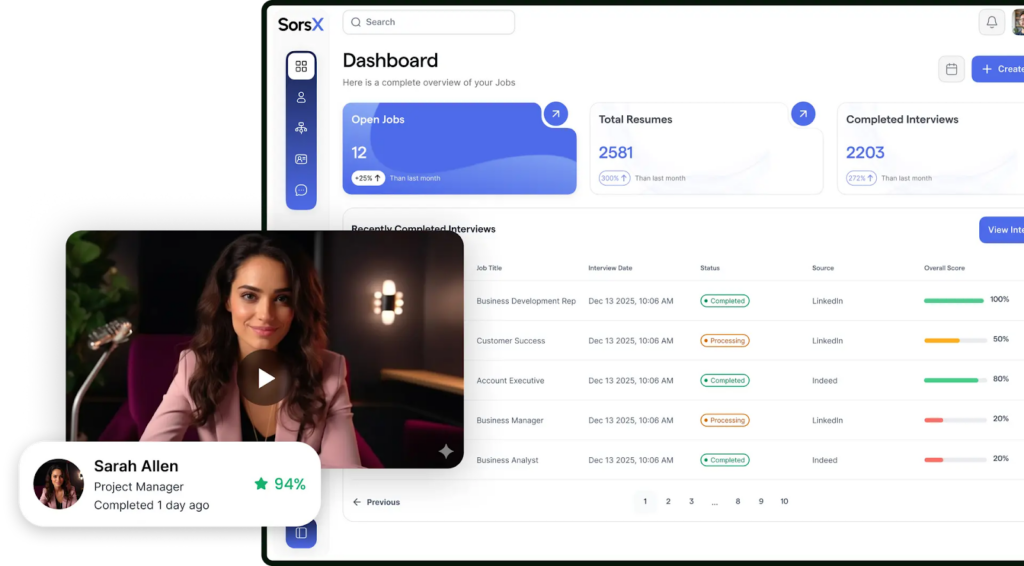
AI recruitment software is software that uses artificial intelligence to support and improve parts of the hiring process. In simple terms, it helps recruiting teams handle repetitive tasks, organize candidate data, surface relevant applicants, and make hiring workflows more efficient.
Depending on the platform, AI recruiting software can help with tasks such as:
- parsing resumes
- matching candidates to job requirements
- ranking or shortlisting applicants
- automating interview scheduling
- supporting structured screening workflows
- generating hiring insights from recruitment data
A useful way to think about recruitment AI software is this: it does not replace recruiting strategy or human judgment. It helps teams process information faster and work more consistently, especially when application volume is high.
Why AI Recruitment Software Matters
Traditional hiring workflows often break down when recruiters are dealing with too many open roles, too many applications, or too many manual steps. Reviewing resumes one by one, moving candidates between stages, coordinating interviews, and keeping stakeholders aligned can slow down the process and create friction for both recruiters and candidates.
That is where AI in recruitment software becomes valuable. It helps teams reduce manual workload and create more structured hiring processes. Instead of spending hours on repetitive admin, recruiters can focus more on evaluation, communication, and decision-making.
This matters for several reasons.
First, speed matters. A slow hiring process can cause strong candidates to drop out or accept other offers.
Second, consistency matters. When teams rely on unstructured screening or scattered workflows, decision quality often suffers.
Third, candidate experience matters. Applicants notice when hiring feels disorganized, delayed, or unclear.
For growing companies, the real value of AI powered recruiting software is not just automation. It is the combination of speed, structure, and better operational visibility.
How Does AI Recruitment Software Work?
At a high level, how does AI recruitment software work comes down to five core functions.
1. Job and candidate data collection
The software collects hiring-related data from job descriptions, resumes, application forms, interview workflows, and internal hiring stages. This creates a centralized system where teams can review candidate information in one place instead of across disconnected tools.
2. Resume screening and matching
This is one of the most common entry points for AI based recruitment software. The system analyzes candidate profiles against role requirements such as experience, skills, education, or other criteria defined by the hiring team.
The goal is not to make the final hiring decision automatically. The goal is to help recruiters identify which applications deserve closer review.
3. Candidate ranking and shortlisting
Many AI recruitment tools then organize candidates into priority groups based on fit signals, required qualifications, or workflow rules. This can help teams handle large applicant pools more efficiently and reduce time spent on early-stage sorting.
4. Workflow automation and communication
A major strength of recruiting AI software is automation. Platforms may automate interview scheduling, status updates, candidate routing, reminders, and other repetitive tasks that usually slow recruiters down.
This is often where teams feel the first operational benefit, because small workflow improvements can save hours each week.
5. Insights, reporting, and optimization
Beyond screening and automation, AI recruitment software can also help teams understand what is happening in their funnel. For example, it may show where candidates drop off, how long roles stay open, or which stages create bottlenecks.
That reporting layer is important because better hiring does not come only from moving faster. It also comes from learning where the process needs improvement.
Benefits of AI Recruitment Software
When teams ask about the benefits of AI recruitment software, they are usually asking whether it improves outcomes or just adds another tool. The answer depends on implementation, but there are several clear benefits when the software is used well.
Faster screening
Recruiters can review higher volumes of applications more efficiently and spend less time on repetitive filtering.
More consistent evaluation
Structured workflows make it easier to assess candidates against the same criteria rather than relying on fragmented manual review.
Better recruiter productivity
Admin-heavy work such as sorting, scheduling, and status tracking can be reduced, giving recruiters more time for high-value tasks.
Improved candidate experience
Faster responses, clearer communication, and smoother workflows can make the hiring process feel more professional and candidate-friendly.
Stronger decision support
By organizing data and surfacing relevant insights, AI recruiting software can support better decisions without removing human oversight.
Common Use Cases for AI Recruitment Tools
Not every team uses AI recruitment tools in the same way. The strongest use cases usually depend on hiring volume, team size, and process maturity.
Common use cases include:
screening large numbers of applicants for high-volume roles
supporting talent acquisition teams with structured shortlisting
automating interview coordination
improving pipeline visibility across open roles
helping distributed hiring teams stay aligned on process
reducing operational delays in early-stage recruitment
For a smaller company, the value may come from saving recruiter time. For a larger team, the value may come from standardization, workflow control, and reporting.
What AI Recruitment Software Does Not Replace
This is one of the most important parts of AI recruitment basics.
AI can support hiring, but it should not replace core human responsibilities such as:
- defining hiring goals
- setting fair evaluation criteria
- conducting thoughtful interviews
- assessing soft skills and team fit
- making final hiring decisions
- reviewing outcomes for quality and fairness
A good platform should strengthen recruiter judgment, not sideline it. Teams should view recruitment AI software as decision support and workflow infrastructure, not a substitute for responsible hiring.
How to Choose the Right AI Recruiting Software
If your team is evaluating tools, do not start with the most complex feature list. Start with the workflow problem you are trying to solve.
Ask questions like:
- Are we trying to reduce screening time?
- Do we need more structured shortlisting?
- Is scheduling slowing us down?
- Do we lack visibility into our hiring funnel?
- Are candidates experiencing too much delay?
Then evaluate whether the platform offers:
- clear workflow structure
- transparent screening logic
- flexible team collaboration
- reporting that is useful in practice
- a good experience for both recruiters and candidates
- enough control for human review and oversight
For many teams, the best AI powered recruiting software is not the one with the longest feature list. It is the one that fits the real hiring process and helps the team work better every day.
Common Mistakes to Avoid
Teams often struggle with AI recruitment adoption for simple reasons.
One mistake is expecting the software to fix a broken hiring process on its own. Technology works best when the team already has clear stages, aligned criteria, and defined ownership.
Another mistake is over-automating too early. Automation is helpful, but candidate communication and evaluation still need care and context.
A third mistake is choosing based only on trend language. Terms like “AI-powered” can sound impressive, but buyers need to look deeper at the workflow value, usability, and operational fit.
Finally, some teams forget change management. Even the best AI based recruitment software needs adoption from recruiters, hiring managers, and operations stakeholders to deliver value.
Final Thoughts on AI Recruitment Basics
So, what is AI recruitment software really?
It is a practical category of hiring technology designed to help teams work faster, more consistently, and with better visibility. At its best, it supports screening, shortlisting, automation, and decision-making without removing the human judgment that good hiring depends on.
For companies handling growing hiring demand, AI recruitment software can become a meaningful operational advantage. The key is to approach it with realistic expectations: use AI to reduce repetitive work, improve structure, and support better decisions, not to automate away accountability.
Teams that understand that balance are usually the ones that get the most value from AI in hiring.
If your team is exploring ways to make screening, shortlisting, and interview workflows more structured, see how SorsX supports faster, more organized hiring with AI-powered recruitment workflows.